Sunday, August 15, 2010

My Latest Newspaper Editorial: Sheltered Workshops Tarnish ADA's Intent

Here's the original: http://www.dnews.com/story/Opinion/54215/

Last week marked the 20th anniversary of the signing of the Americans with Disabilities Act.  The passage of the ADA by the George H.W. Bush administration was seen as a landmark civil rights policy for people with disabilities and was touted as a step toward ending discrimination on the basis of ability in the United States. Although the ADA has provided impetus for many important changes, the overall intent of the law has not been fulfilled.

As a researcher in the field of disability studies, I am very interested in the origins of attitudes toward individuals with disabilities and other physical differences. Over the years I have consistently identified a disturbing undercurrent of bitterness toward individuals with disabilities. A couple of years ago I spoke with a group of teachers from across Idaho about students with disabilities, and I was honestly shocked by some of their responses. One teacher said: "The handicapped kids give me a job, but I often wonder if I'm wasting my time. Most of the kids I work with won't grow up to have jobs, pay taxes, or contribute to the community; they will just be a burden on the system when they grow up." To be fair, this sentiment is widely held by many across our community and country. 

We live in a culture that is hopelessly preoccupied with physical perfection, and we are quick to judge those who appear or behave differently. We also live in a country that equates an individual's social worth with "productivity" - we glorify those who can generate/accumulate capital and look good while doing it. These distorted values leave many of us disillusioned and demoralized, but it also provides the energy for perpetuating destructive stereotypes about individuals with disabilities as unproductive, helpless and objects of pity. 

The ADA was drafted to combat the discrimination and prejudice that historically has relegated people with disabilities to the role of recipients of charity. The overall intent of the ADA was to extend basic civil rights protections to individuals with disabilities who experience discrimination in employment, housing, transportation, education and community life. The idea was to change society's treatment of people with disabilities, and to provide the legal recognition of individuals with disabilities as equal, productive members of American society. 

The ADA dramatically altered the urban landscape for individuals with disabilities in larger cities - curb cuts, ramps and accessible public transportation are now important elements of the U.S. urban geography, but individuals with disabilities in rural areas, and especially Idaho, still have to deal with a widespread dearth of public transportation, accessible homes and businesses, community resources and viable employment opportunities. Unfortunately, Idaho is a state that is severely underdeveloped in the area of viable employment opportunities for people with disabilities.

Nationally, the rate of unemployment for people with disabilities is an astounding 63.2 percent. In Idaho the rate of unemployment for individuals with disabilities is 57.4 percent, according a 2009 report issued by the Center on Disability Statistics and Demographics. Admittedly, Idaho is doing marginally better than the national average, but Idaho's numbers can be deceiving. Idaho is a state that still supports a large sheltered workshop industry where people with disabilities are employed for extremely low pay in dead-end, grindingly boring jobs. Most sheltered workshops also are exempt from minimum wage laws, a fact that makes them one of the sole bastions of modern slave labor in the U.S.

Sheltered workshops are counterproductive to the intent of the ADA. People with disabilities deserve the opportunity to hold meaningful, community-based jobs and to be viewed as truly productive members of their communities and the state. Idaho has a moral imperative to address the disability employment situation in our state. The ADA is a good foundation, but it doesn't change attitudes or provide jobs. As disability activist Mary Johnson has noted: "A law cannot guarantee what a culture will not give."

Thursday, August 5, 2010

Students Come to UI Horribly Underprepared


For the past three years it has been my privilege to teach in the University of Idaho Core Discovery program.  Each year I look forward to meeting the new crop of first-year students.   I love to see their passion for the adventures of college life; but, from a pedagogical perspective, I have also learned to dread the first few weeks of class.  At the beginning of every semester, like clockwork, I inevitably get the same question from my students: “Is this going to be on the test?”  

I take great pains to inform my students that I don’t believe in tests, but prefer to assess their learning through reflective journaling, critical essays, and research papers, but that response makes them very nervous and creates tremendous tension in the classroom.  The anxiety level reaches fever pitch when I give them their first assignment, usually a variation on the “This I Believe” essay format made popular by Edward R. Murrow in the 1950’s and revived by NPR several years ago.  There are always a handful of students that rise to the challenge, but the vast majority struggle to complete the assignment.  Most students provide me with a generic essay that tells me more about what they have been told they should believe than what they really think.

Every year it is more and more difficult to see my students struggle with expressing and understanding themselves.  The rigidly prescriptive requirements of NCLB and the alienating nature of standards-based curriculum is the primary reason why so many students come to the university unprepared for the academic demands of college courses.  Regardless of how they perform on high school exit exams, like the WASL or ISAT, students are still coming to the university horribly underprepared. 

The 2009 ACT College Readiness Report indicates that only 21 percent of students meet the knowledge and skill benchmarks in reading, writing, math, and science required to succeed in entry-level college courses.   In an interview on February 6, 2010 U.S. Secretary of Education Arne Duncan cited the statistic that 60% of college students have to take remedial courses in Math or English before they can adequately compete at the college level.   Current educational methods in U.S. public schools alienate students by focusing on discrete, measurable, learning outcomes that are decontextualized and focused on getting students to pass standardized tests like the WASL and ISAT in the interest of keeping schools’ scores high enough to avoid official sanctions while continuing to move students through with the lowest cost possible.  This focus on a single homogenized curriculum necessitates the marginalization of diverse voices and perspectives, creating students with narrow worldviews and little connection to place or community.  For many students learning has become a rote, mechanical exercise while the creativity and critical thinking skills, so essential to success at the college level, have been removed from the entire K-12 educational enterprise.

The Core Curriculum at the University of Idaho is committed to challenging and supporting this first generation of NCLB students through creative, interdisciplinary curricula that requires them to think about their place in their communities and their identity in the context of a broader, more diverse world of ideas; but the Core Curriculum at the University of Idaho is a program that is hanging by a thread.  Since its inception over 10 years ago the Core has had to beg and borrow from other colleges to maintain its status and solvency.  The Core Curriculum has become an easy target for administrators and faculty who see it as a drain on limited resources that could be used to hedge against deeper departmental cuts in these years of tight budgets.  But the Core Curriculum has a proven track record of promoting student retention and future success at the University of Idaho.   It has never been more important that first-year students at the University of Idaho experience an outreach-based pedagogy that challenges the technocratic methods they have grown accustomed to in the public schools.  In my opinion it’s one of the few programs that might help them recover their humanity and reinstill the wonder and passion of learning.

Tuesday, February 23, 2010

Monster Music Mix...for my Monsters!

So, here's my annual music mix that I make for my Monsters students. As much as I would like to provide each student with this music, I am suspicious and wary of copyright and filesharing issues. This is the best I can do...but many will find it interesting, of that I am sure!

Tuesday, January 12, 2010

Twenty Two Years Ago Today I Froze...

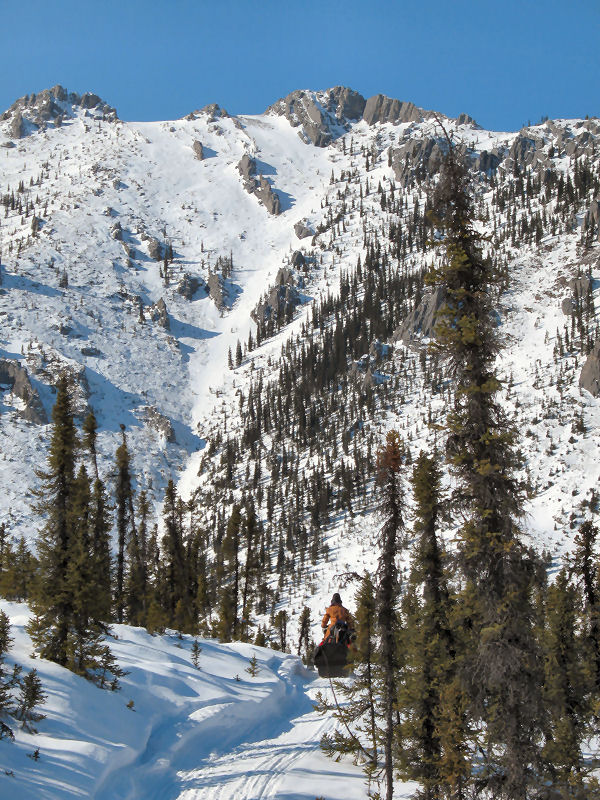
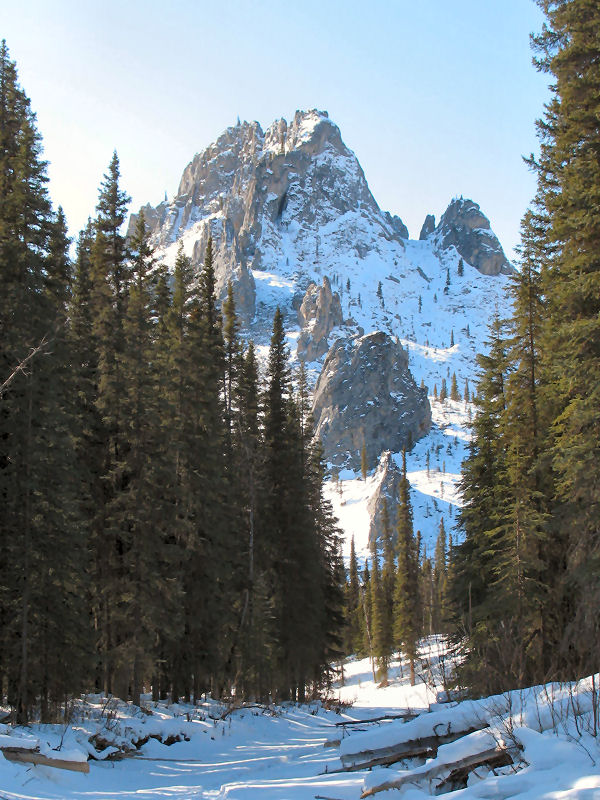
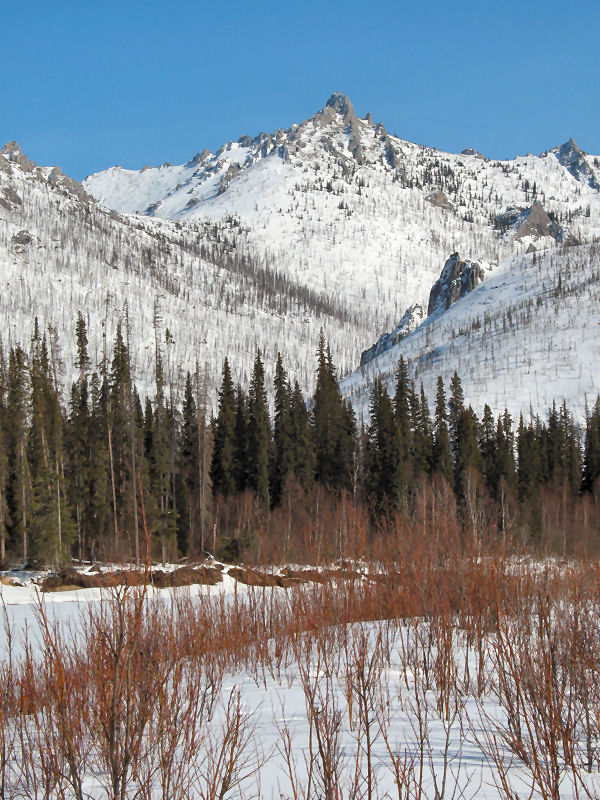
Almost twenty-two years ago, to the day at this exact time (9:30 pm), I was huddled under a snow-heavy willow tree seeking shelter from the vicious and incessant wind along Fossil Creek, deep in the White Mountains National Recreation Area. I was 15, and very, very cold…hypothermia had set in a couple hours earlier and I had passed the point of shivering. I couldn’t feel my hands, one of my feet had severe frostbite, and I had just about given up hope of getting warm. I was huddled therewith my father and we were both trying to keep each other sane and awake so that we would at least survive another hour until Dick Bouts came back on his snowmachine to carry us to the Windy Gap cabin where my younger brother Andy, hopefully, had a fire and warm sleeping bags waiting for us.

It was -45 degrees with a 20-25 mph wind and we had been in those conditions all day, trying to break trail with our snowmachines into the Windy Gap cabin. We had started at 10:00 in the morning, just as the sun broke the horizon and we had battled the elements all day, exhausting both our bodies and spirits. Around noon my snow machine had bogged down in a new patch of overflow on Wickersham Creek and, foolishly, I had stepped off the snowmachine to pull it onto more solid ice. I sunk in up to my knee and filled my right bunny boot with slush and water. I hated wet feet and the sloshing and squishing in my boot drove me crazy. By 2:00 pm we reached the Colorado Creek cabin where we intended to eat lunch and warm up before pushing on to the Windy Gap cabin for the night.

The Colorado Creek cabin is located next to a small kettle pond in a wide, windswept patch of tundra. As Andy and I broke out our peanut butter sandwiches, frozen stiff and solid, my Dad and Dick Bouts went out to find the woodpile for the cabin to light the woodstove. The plan was to eat lunch and allow me to dry out my boot and socks before proceeding to Windy Gap. In anticipation of the imminent warmth a fire would afford I took off my bunny boot and socks and put my cold foot in by parka to warm up. Just after I had removed my boot the adults returned with the devastating news that there was no wood to be found. To make things worse, the heavy snow over Christmas had buried all of the small black spruce that might have been cut for firewood in years with less snow. So, there I was with my wet, cold foot out in the -45 degree cabin, a pair of socks frozen stiff, and a bunny boot glazed inside and outside with ice. The next potential chance for warmth was 26 snowbound miles away at the Windy Gap cabin.

I had no choice but to don my frozen socks and boot. We all knew that the chances of my foot reheating the boot were next to none and we drove our snowmachines over the unbroken trail like bats out of hell in the hopes that the minutes we saved would lessen the inevitable damage to my foot, but we were stopped by deep snow and low gas almost 7 miles from the cabin. I remember sitting at the top of the ridge that dropped precipitously into the Fossil Creek drainage with 42 miles of trail behind us and 7 miles of unbroken powder ahead. We debated the pros and cons of going back or forging ahead and decided that our best bet lay in pushing on with one snowmachine to Windy Gap cabin to conserve gas. It was decided that my dad and I would scout and compact the trail with snowshoes down to Fossil Creek (almost 2 miles), Dick Bouts would follow our trail on an old BLM SkiDoo Tundra with Andy.

Once we got down to Fossil Creek, the overflow had created a smooth, new sheen of ice that Dick and Andy could follow without our help. It was decided that Dick and Andy would proceed to the Windy Gap cabin. Andy would remain at the cabin and get a fire started and Dick would then ferry my dad and I to the cabin, one by one, depending upon who was worse off. So, that’s why we found ourselves huddled beneath that small willow bower on a frigid January evening. I remember sitting there with my dad, the cold moonlight casting long shadows over the deep snow, straining our ears listening for the distant whine of the old Tundra coming back along the creek bed for us. I don’t remember much beyond this…neither does my dad.

My father and I haven’t talked much of this evening and I remember very little beyond being in the cabin, lying on an old moth-eaten mattress next to the fire crying as my frozen foot slowly began to unthaw. I am certain that very few people have experienced the sensation of warm blood flowing back into a frozen appendage, bursting the frozen, damaged blood vessels as it goes. It’s and excruciating experience and results in significant tissue damage. I eventually fell asleep, or passed out…I can’t remember which, but awoke the next morning in Windy Gap cabin with a coating of ice over my sleeping bag and a right foot that was almost three times its normal size. Our initial plan had been to head back to the Elliot Highway that morning and get back to town, but it quickly became apparent that my swollen foot was not going to fit in my boot. So we decided to stay at Windy Gap.

We ended up staying at Windy Gap for 4 days. We lived off old cans of Dinty Moore beef stew left from the winter before and by rationing our snacks. We spent that days stoking the fire to keep the -40 temperatures at bay, playing cards, reading and rereading old Outdoor Life magazines, and telling each other stories and jokes. In the evening we’d look out to see the most spectacular array of stars and we’d try and identify the few constellations we knew. The distant howl of wolves were haunting and left an indelible impression on me; I recall not being scared, in fact it was comforting to know that there were other living creatures out in the cold and I felt reassured by the nightly chorus of the wolves.

After our fourth day at Windy Gap the swelling in my foot had gone down enough to allow me to put on my boot again; it had also warmed up to a balmy -10 degrees so we packed up and ferried gear and people to the snowmachines we had left at the top of the Fossil Creek drainage. We unthawed our snowmachines and safely returned to our cars, parked near the Tolovana River on the Elliot Highway, but I still remember this trip every winter. When the temperature dips I still feel it in my right foot. My right foot has never recovered from the tissue damage and when the temperature falls below freezing my foot begins to get cold. My wife still doesn’t understand why I wear two pairs of socks on my right foot in the winter, and despite my best attempts my right foot still gets numb. So, at this time of year my foot always takes me back to that frigid evening on Fossil Creek when I realized that I was alone and alive.

Thursday, December 3, 2009

Tuesday, September 15, 2009

The Problems with Special Ed by Jay P. Greene on National Review Online

The Problems with Special Ed by Jay P. Greene on National Review Online

This is an outstanding article that is worth a read if you get a chance. Although I don't want to totally agree with everything Dr. Greene says here, I do believe he has a point and I am a strong advocate for redefining the IDEA disability categories and revisiting programs for underprivileged and at-risk students.
Shared via AddThis

Monday, September 7, 2009

Elevator Pitch and Blog Focus

So, I'm really going to make an effort to write and post something here for the next month. It's a 31 day challenge that I've taken to strengthening and updating my online presence...dorky? Yes! Necessary? Yes! Will it help me think through some issues and keep focused on my scholarship? Yes! So, what do I have to lose? A few minutes a day?

The first challenge is an attempt to define the focus of this blog. Although I know the title indicates that the blog is focused on Disability Studies at UI, I'm not so sure that's what I want it to be...so, I'm going to try this elevator pitch method to define my focus.

So, here's my rough draft: "Disability Studies at the University of Idaho provides thought-provoking content and ideas on creating inclusive communities for scholars and everyday people...because inclusion means everyone!"

What do you think? Too cheesy? Too short? Too broad? Feedback is much appreciated!